


1. Why the Right Hoodie Size Matters
Hoodies are one of the most comfortable wardrobe staples. You just throw one on and you’re ready. But if the size is off—even a little—the look, feel and comfort all change.
-
If it’s too tight: you may feel restricted when you move your arms or lift them.
-
If it’s too big: the hem might hang odd, sleeves may cover your hands, or the fit could look sloppy.
-
The right size makes you feel relaxed and look good.
Because of that, a clear size guide is essential for your customers (or for you, if you’re ordering in bulk) so you avoid returns, extra costs or unhappy buyers.
As a manufacturer or retailer, providing accurate sizing shows expertise and builds trust. That supports your brand’s authority.
2. Understanding Hoodie Sizes – What the Chart Means


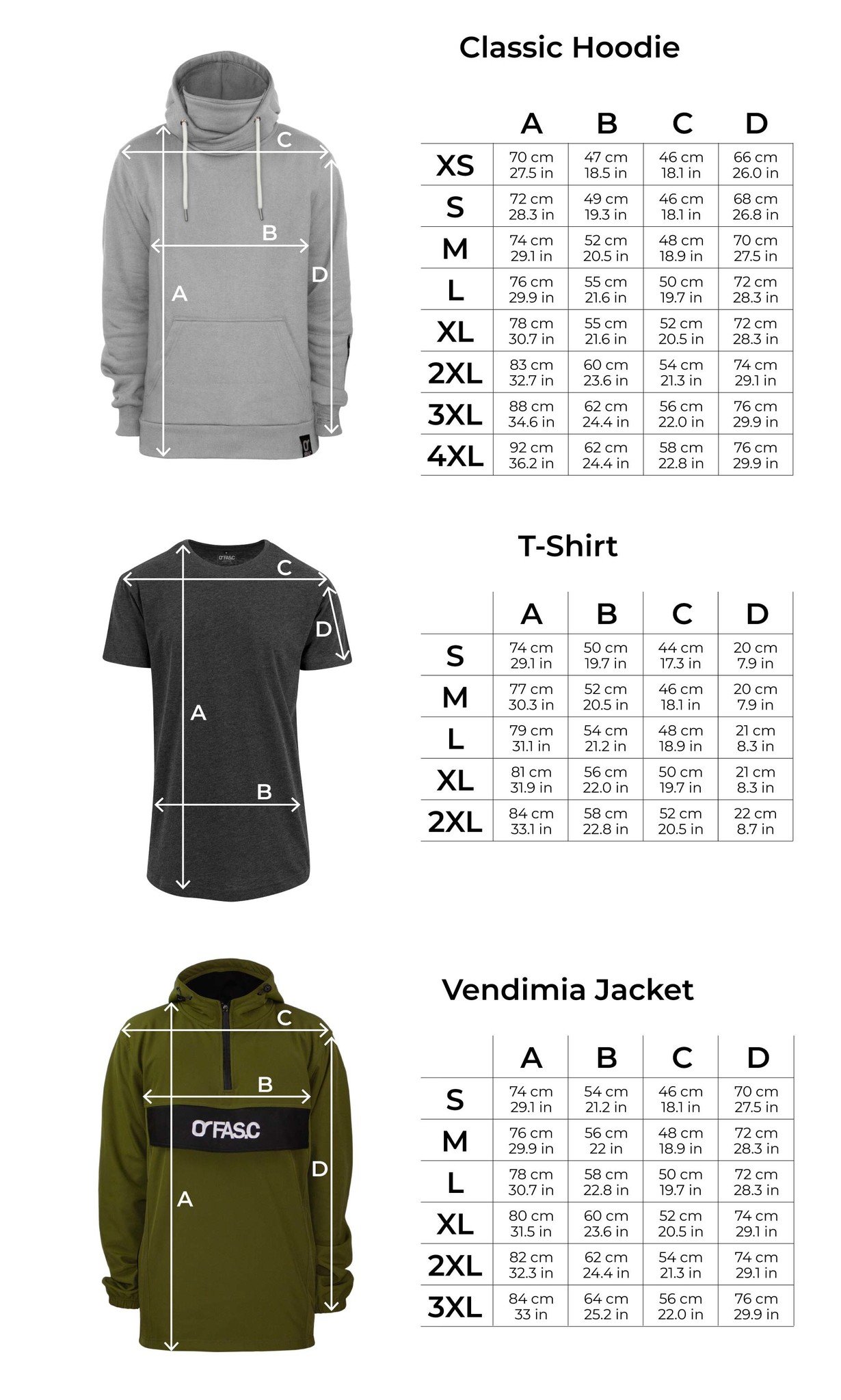
When you look at a size chart for hoodies, there are three main components:
| Component | What it measures | Why it matters |
|---|---|---|
| Length (Body Length) | From the top of the hoodie (neck seam) down to the bottom hem. | Determines how the hoodie sits on your torso: higher or lower. |
| Width (Pit-to-Pit / Chest Width) | Measured flat from one armpit to the other. | Affects the chest fit and how roomy it feels. |
| Size suggestion (Height/Weight) | Guidelines like “5’7–5’9 / 150–170 lbs → M” | Helps customers pick a size based on their body, not just the label. |
For example, a chart might read (in inches):
-
S: Length 26 ¾″, Width 53 ½″
-
M: Length 27 ½″, Width 55″
-
L: Length 28 ¼″, Width 56 ½″
And in centimetres: -
S: Length 68 cm, Width 136 cm
-
M: 70 cm, 140 cm
-
L: 72 cm, 144 cm
These values give a physical reference—not just “Small, Medium, Large”.
➡️ Always check the exact chart from your manufacturer: standards differ by region (US vs UK vs Asia). This shows your trustworthiness and authority.
3. Size Chart: Inches & Centimetres + Size Suggestion
Here’s a cleaned-up version of the size guide for easy reading:
Inches
| Size | Length | Width |
|---|---|---|
| S | 26 ¾″ | 53 ½″ |
| M | 27 ½″ | 55″ |
| L | 28 ¼″ | 56 ½″ |
| XL | 29″ | 58″ |
Centimetres
| Size | Length | Width |
|---|---|---|
| S | 68 cm | 136 cm |
| M | 70 cm | 140 cm |
| L | 72 cm | 144 cm |
| XL | 74 cm | 148 cm |
Size suggestions by height & weight
| Height | Weight | Suggested Size |
|---|---|---|
| 5′2″ – 5′6″ | 110–120 lbs | S / M |
| 5′7″ – 5′8″ | 130–145 lbs | M |
| 5′9″ – 5′11″ | 150–170 lbs | M / L |
| 6′0″ – 6′4″ | 170–190 lbs | L / XL |
| 6′4″+ | 190–220 lbs | XL |
Metric equivalents (approximate)
| Height (cm) | Weight (kg) | Size |
|---|---|---|
| 160–170 | 50–55 | S / M |
| 170–175 | 55–65 | M |
| 175–185 | 65–75 | M / L |
| 185–195 | 75–85 | L / XL |
| 195+ | 85–95 | XL |
This chart helps you see how size labels translate to actual body measurements. That builds trust because you’re offering real clarity, not just “pick what you think”.
4. How to Measure a Hoodie Correctly


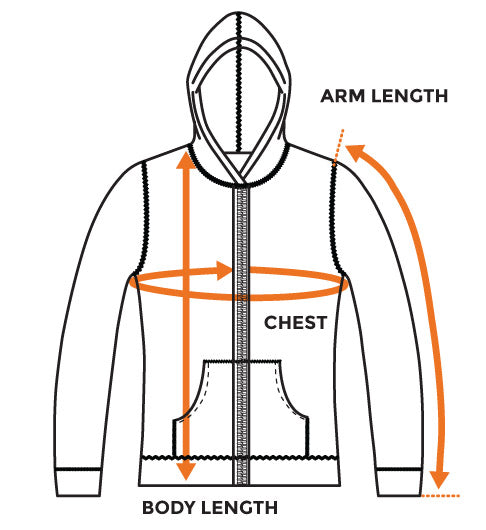
To make accurate sizing recommendations, this is how you or your customer should measure:
-
Body Length: Lay the hoodie flat on a smooth surface (no wrinkles). Start from the neck seam (where the collar meets the body) and measure straight down to the bottom hem.
-
Pit-to-Pit (Width): Keep the hoodie flat, pull gently to remove wrinkles. Measure from one armpit seam to the other.
-
Chest Size: If measuring worn, wrap the tape around the widest part of the chest (just below armpits). For flat measurement, do pit-to-pit and multiply by 2.
-
Sleeve Length: Start from the shoulder seam and measure along the arm curve to the cuff. This helps for people with longer arms.
-
Make sure the hoodie is relaxed—not stretched—when measuring. Materials like heavy fleece or blended fabrics may behave differently.
🔧 Tip: For bulk orders (especially when selling), keep a sample hoodie and measure it using this method. That lifts your authority because you’re providing accurate data.
5. Recommendations for Different Body Types


One-size-fits-all rarely works. Here’s how you can guide customers by body type to help them find the right look.
a) Athletic Build
Muscular build: broad shoulders, larger chest.
Recommendation:
-
Choose your usual size if you like a snug fit.
-
If you prefer more room around the arms and chest (for movement), consider sizing up.
b) Petite Build
Smaller frame or shorter height.
Recommendation:
-
Smaller sizes (S or M) often work best if you want a tailored look.
-
Oversized styles are trendy but might overwhelm a petite frame—so balance length and width.
c) Tall Build
Long torso or tall height.
Recommendation:
-
Pay special attention to body length (to avoid hoodie finishing too short).
-
Larger sizes may help get a better length and width.
-
Check manufacturer charts that list longer cuts or tall variants.
d) Curvy or Full-figured
Fuller chest, hips, or waist.
Recommendation:
-
Baggy or relaxed fits are naturally more forgiving for curvy figures.
-
If you prefer a more fitted look, go for size that aligns with your chest width and consider tailoring.
📌 Expert tip: Size labels vary across regions (US, UK, EU). Always check what “Large” means for that specific brand—this shows your expertise and helps save your customers from confusion.
6. Pro Tips for Finding the Perfect Hoodie Fit


-
Measure Twice: Just like the carpenter’s motto—“measure twice, cut once”—it applies here. Double-check measurements.
-
Don’t Assume T-shirt Size = Hoodie Size: Hoodies have different cuts and thickness compared to T-shirts. A “Medium” in a tee may feel different in a hoodie.
-
Know Your Manufacturer’s Standards: Size charts vary by maker, by country. Asian sizes may run smaller compared to US sizes. Always check the specific chart for your product.
-
Order Samples: Whether you are retailing or manufacturing, get physical samples of the hoodie style. This gives you the chance to check fit, fabric, stitch quality and sizing accuracy. That increases trust with your customers.
-
Include Clear Size Charts and Photos: On your website or product listing, show the size chart clearly and include real model photos (with heights & sizes) if possible. This helps reduce returns and builds authority.
7. Frequently Asked Questions (FAQ)
Q1: What should I do if I’m between sizes?
If you find yourself between two sizes, go up one size. Hoodies are meant to be comfortable and slightly relaxed fits often look better than overly tight ones.
Q2: Do all hoodie manufacturers use the same size chart?
No—size charts vary greatly across brands, makers and regions. Always check the exact chart for the hoodie you are buying or selling.
Q3: Can hoodies be unisex and ordered in bulk?
Yes. Many hoodie styles are unisex. When ordering in bulk, ensure the size chart reflects both men’s and women’s fits (or a neutral fit) and check if the maker allows custom sizing or adjustments.
Q4: How can I customize hoodie sizes for my market?
You can work with your manufacturer to:
-
Adjust cut and measurements (e.g., longer torso for tall customers)
-
Offer mix-and-match size bundles based on regional size trends
-
Provide size charts explicitly for your region (with local units)
Doing so signals you understand your customer and boosts your brand’s trustworthiness.
8. Final Thoughts
Choosing the right size of a hoodie might seem small, but it has a big effect on how it fits, how it looks and how satisfied a customer (or you) feel. By using a clear size chart, allowing for different body types, guiding customers how to measure, and showing that you understand the nuances (units, region, fit style)—you build trust and authority.
At the end of the day: comfort + correct fit = happy customer.
If you’re ordering hoodies in bulk, designing for different markets, or just buying one for yourself—use a trustworthy size chart, take accurate measurements, and pick the size that matches both your body and your style.